

You are here
The cruel experiments of Israel’s arms industry
The Electronic IntifadaRamallah27 December 2016
Round the back of Ramallah’s main hospital lies the house of Iyad Haddad, a 52-year-old human rights investigator. His home office is the shopfront of a decrepit building and at first glance it looks like a bric-a-brac shop. But the objects placed out on the tables are not household trinkets. The surfaces are, in fact, cluttered with spent ammunition, tear gascanisters, sponge bullets and shell casings.
Haddad has spent the past three decades documenting the violence of the Israeli forces occupying his people’s land. These ugly little pieces of memorabilia are his testament to that process.
Many of these weapons have been fired on peaceful demonstrators protesting against Israel’s wall and settlements in the occupied West Bank. The villages of Nilin, Bilin and Nabi Saleh have been organizing regular protests for years. To my surprise, Haddad does not approve of those demonstrations.
“Sometimes they are using us so they can know how to use each kind of weapon,” he said. “For me, these kinds of activities by the Palestinians become helpful to the Israelis because it makes this area into a laboratory to test their weapons, to develop them and make it a commercial industry in order to sell them to other countries.”
The idea that the Israeli arms industry benefits from the occupation through having a captive population it can test new weaponry on is now widely accepted.
Israel tries out weapons in the West Bank and Gaza and then presentsthem as “battle proven” to the international market.
The high-velocity tear gas canister has been heavily tested in Bilin. In 2009, the weapon killed Bassem Abu Rahmah, an unarmed local activist, protesting the wall slicing into that village. At the end of 2011, another protester, Mustafa Tamimi, was killed in Nabi Saleh by a tear gas canister, shot at his head.
There is a sense of weariness in Haddad’s voice. “I have seen how they are developing their tools and their weapons industry and the ways of dealing with the community,” he said. “And, in 30 years, I never heard once that there is any kind of accountability for any soldier.”
But he goes on. He must go on.
“Tested and retested”
“The laboratory of the occupied territories is where things can be fine-tuned, they can be tested, they can be retested,” said Neve Gordon, a politics professor at Ben-Gurion University of the Negev. “They can say, ‘Hey this was used by the IDF [Israel’s military], this must be good.’ And that helps the marketing of the goods.”
Later, in Ramallah, I sat down with Abdallah Abu Rahmah, coordinator of the Popular Struggle Committee against the wall and settlements in Bilin. Every Friday – for a decade – he and his neighbors have gone to the wall to protest.
For these efforts, they have been subject to night raids by the Israeli military. Abu Rahmah himself has been arrested and imprisoned by Israel a number of times.
“There are many reports about when they [the Israelis] have tried to sell military products and they told the buyers about its use in Bilin,” said Abu Rahmah. “Things like skunk water, they used it the first time in our village.”
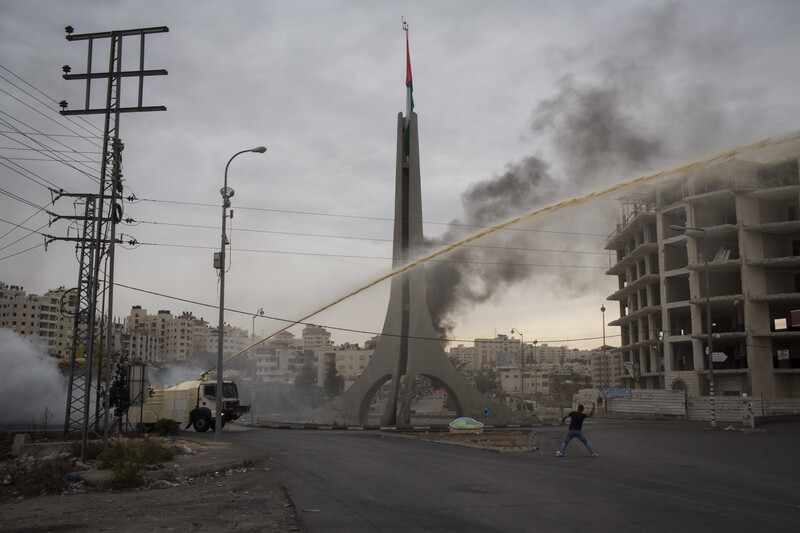
Skunk water is a putrid smelling liquid that is sprayed at protesters in order to get them to disperse. “Because Bilin is famous, sometimes they come to our actions and they take video and photographs showing how effective the weapons are in stopping the action,” Abu Rahmah said.
Jeff Halper, author of War Against the People, a book on Israel’s arms and surveillance technology industries, said: “Israel has kept the occupation because it’s a laboratory for weapons.”
“Now, there has always been a tension,” added Halper, also a founder of the Israeli Committee Against House Demolitions. “Because you’ve had the right wing that look at the West Bank as Judea and Samaria and Gaza as Gush Katif and, of course, East Jerusalem. So they want it all as part of the land of Israel. But then you’ve got another part especially the – I would say the military and the economic people – that say, ‘Hey, this is a laboratory, this is really a resource for us, and we really shouldn’t give it up.’”
Eitay Mack, a Jerusalem-based human rights lawyer and activist, raises the prospect that Israel uses Palestinians as test subjects for foreign arms companies as well.
Testing America’s bullets
“In East Jerusalem, the Americans give Israel sponge bullets,” Mack said. “First, they started with a blue sponge bullet but then they decided – this is their statement – that because the Palestinians wore a lot of clothes, it was not very effective so then they changed it to a [more powerful] black sponge bullet, which caused huge damage and there are dozens of Palestinians that have lost their eyes and other organs of their body.”
The black sponge bullets are manufactured by Combined Tactical Systems, a Pennsylvania-based firm which also supplies Israel with tear gas.
The company’s brochure for these bullets contains a note marked “caution.” It reads: “Shots to the head, neck, thorax, heart or spine can result in fatal or serious injury.”
Israeli troops began using the black bullets in 2014.
The Israeli arms industry is dominated by four companies: Israel Aerospace Industries, Elbit, Rafaeland Israel Military Industries.
More than 75 percent of all weapons exported by Israel are made by the first three of those firms. In 2015, the total value of Israel’s arms exports came to $5.7 billion.
The attack on Gaza the previous year enabled Israel to showcase some of its newest weapons. It was reported, for example, that the Hermes-900, one of Elbit’s drones, made its “operational debut” in that assault.
Israel allocates more than 5 percent of gross domestic product to the military. That means Israel spends a higher proportion of its national income on the military than even the US, the world’s only superpower.
“War sells weapons”
Some veterans of the Israeli military have developed careers as experts on the arms industry.
Shlomo Brom is one of them. A retired brigadier general, he now works at the Institute for National Security Studiesin Tel Aviv.
I asked Brom if it’s true that Israeli arms companies use the fact that their products have been tested on Palestinians to gain international business. “Of course,” he replied. “Why not? Marketing [professionals] try to use any advantage and if they can use the advantage that this system was tested operationally and it worked, they will of course use it for marketing.”
Uzi Rubin, a founder of Arrow, an Israeli anti-ballistic missiles program, is now a researcher at the Begin-Sadat Center for Strategic Studies in Bar-Ilan University near Tel Aviv.
He defended the way Israel has marketed its weapons as “battle proven.”
“It is legitimate because the Vietnam War sold a lot of weapons,” he said. “War usually sells weapons. But this is not to say that Israel is seeking war in order to sell weapons.”
Barbara Opall-Rome has spent a few decades covering Israel for DefenseNews, a trade magazine for arms manufacturers. She advocates that Israel should allocate greater resources into what she calls “less-than-lethal technologies.”
In her view, the Israeli weapons industry should think beyond weapons such as tear gas and skunk water that it is already deploying in the West Bank.
“I’m talking about using the electromagnetic spectrum or high-powered microwaves to get people dizzy,” she said. “If you’re dizzy you lose your balance. You know, I’d rather people just get an upset stomach and really just have to have diarrhea right in the middle of a demonstration or puke their guts out than to be killed.”
Her comments reveal much about the sadistic mentality of Israel’s weapons-makers and their promoters. For them, Palestinians are not human beings worthy of respect but subjects in one cruel experiment after another.
Matt Kennard is director of the Centre for Investigative Journalism in London. He is the author ofIrregular Army: How the US Military Recruited Neo-Nazis, Gang Members and Criminals to Fight the War on Terror (Verso, 2012) and The Racket: A Rogue Reporter vs The American Elite (Zed, 2016). His trip to Palestine was partly funded by the Pulitzer Center on Crisis Reporting.
The occupied West Bank and Gaza Strip are Israeli weapons manufacturers’ laboratories, and Palestinians are their subjects.
— Read on electronicintifada.net/content/cruel-experiments-israels-arms-industry/19011
INTIFADA ELEKTRONIK
Kamu di sini
Eksperimen kejam industri senjata Israel
Matt Kennard
Intifada Elektronik
Ramallah
27 Disember 2016
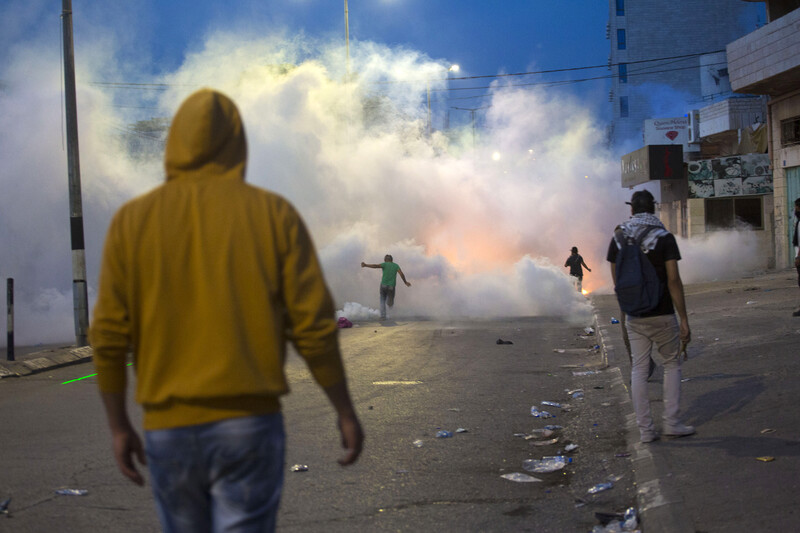
Penunjuk perasaan Palestin berdiri di awan gas pemedih mata yang ditembak oleh tentera Israel semasa konfrontasi di bandar Bethlehem di Tebing Barat pada Oktober 2015. Anne Paq ActiveStills
Di belakang rumah sakit utama Ramallah terletak rumah Iyad Haddad, seorang penyiasat hak asasi manusia berusia 52 tahun. Pejabat kediamannya adalah bahagian depan bangunan yang runtuh dan pada pandangan pertama ia kelihatan seperti sebuah kedai bric-a-brac. Tetapi objek yang diletakkan di atas meja bukanlah perhiasan rumah tangga. Permukaannya sebenarnya dipenuhi dengan peluru yang habis, tabung gas pemedih mata, peluru span dan selongsong cangkang.
Haddad telah menghabiskan tiga dekad terakhir untuk mendokumentasikan keganasan pasukan Israel yang menduduki tanah rakyatnya. Huruf kecil yang hodoh ini adalah bukti prosesnya.
Sebilangan besar senjata ini ditembakkan ke arah demonstran damai yang memprotes tembok Israel dan penempatan di Tepi Barat yang diduduki. Perkampungan Nilin, Bilin dan Nabi Saleh telah mengadakan demonstrasi secara berkala selama bertahun-tahun. Yang mengejutkan saya, Haddad tidak menyetujui demonstrasi tersebut.
“Kadang-kadang mereka menggunakan kami sehingga mereka dapat mengetahui cara menggunakan setiap jenis senjata,” katanya. “Bagi saya, kegiatan semacam ini oleh orang-orang Palestin menjadi bermanfaat bagi orang Israel kerana menjadikan kawasan ini menjadi makmal untuk menguji senjata mereka, mengembangkannya dan menjadikannya industri komersial untuk menjualnya ke negara lain.”
Idea bahawa industri senjata Israel mendapat keuntungan dari penjajahan dengan memiliki tawanan yang dapat menguji persenjataan baru kini diterima secara meluas.
Israel mencuba senjata di Tepi Barat dan Gaza dan kemudian mempersembahkannya sebagai “terbukti perang” ke pasaran antarabangsa.
Tabung gas air mata berkelajuan tinggi telah banyak diuji di Bilin. Pada tahun 2009, senjata itu membunuh Bassem Abu Rahmah, seorang aktivis tempatan yang tidak bersenjata, memprotes tembok ke kampung itu. Pada akhir tahun 2011, seorang penunjuk perasaan lain, Mustafa Tamimi, terbunuh di Nabi Saleh oleh tabung gas pemedih mata, ditembak di kepalanya.
Terdapat rasa letih dalam suara Haddad. “Saya telah melihat bagaimana mereka mengembangkan alat dan industri senjata mereka dan cara berurusan dengan masyarakat,” katanya. “Dan, dalam 30 tahun, saya tidak pernah mendengar bahawa ada pertanggungjawaban terhadap mana-mana askar.”
Tetapi dia terus berjalan. Dia mesti teruskan.
“Diuji dan diuji semula”
“Makmal wilayah yang diduduki adalah di mana keadaan dapat diperbaiki, mereka dapat diuji, mereka dapat diuji kembali,” kata Neve Gordon, seorang profesor politik di Ben-Gurion University of the Negev. “Mereka dapat mengatakan, ‘Hai ini digunakan oleh IDF [tentera Israel], ini pasti bagus.’ Dan itu membantu pemasaran barang.”
Kemudian, di Ramallah, saya duduk bersama Abdallah Abu Rahmah, koordinator Jawatankuasa Perjuangan Popular menentang tembok dan penempatan di Bilin. Setiap hari Jumaat – selama satu dekad – dia dan jirannya pergi ke tembok untuk memprotes.
Atas usaha ini, mereka telah diserang oleh tentera Israel pada waktu malam. Abu Rahmah sendiri telah ditangkap dan dipenjarakan oleh Israel beberapa kali.
“Ada banyak laporan tentang kapan mereka [Israel] telah berusaha menjual produk ketenteraan dan mereka memberitahu pembeli tentang penggunaannya di Bilin,” kata Abu Rahmah. “Perkara seperti air skunk, mereka menggunakannya pertama kali di kampung kami.”
Skunk water adalah cairan berbau busuk yang disembur ke arah para penunjuk perasaan untuk membuat mereka tersebar. “Kerana Bilin terkenal, kadang-kadang mereka datang ke tindakan kami dan mereka mengambil video dan gambar yang menunjukkan seberapa berkesan senjata dalam menghentikan tindakan itu,” kata Abu Rahmah.
Kenderaan tentera Israel melepaskan tembakan skunk tinggi di atas penunjuk perasaan
Seorang pemuda Palestin melemparkan batu ke arah sebuah trak dengan kanon air skunk semasa konfrontasi berhampiran penempatan Beit El di luar bandar Ramallah di Tepi Barat pada Oktober 2015. Oren Ziv ActiveStills
Jeff Halper, pengarang War Against the People, sebuah buku mengenai industri teknologi senjata dan pengawasan Israel, mengatakan: “Israel menyimpan penjajahan itu kerana ia adalah makmal senjata.”
“Sekarang, selalu ada ketegangan,” tambah Halper, juga pengasas Jawatankuasa Israel Menentang Pembongkaran Rumah. “Kerana anda memiliki sayap kanan yang memandang Tepi Barat sebagai Judea dan Samaria dan Gaza sebagai Gush Katif dan, tentu saja, Yerusalem Timur. Oleh itu, mereka menginginkan semuanya sebagai sebahagian dari tanah Israel. Tetapi kemudian anda mempunyai bahagian lain terutamanya – saya akan mengatakan tentera dan ekonomi – yang mengatakan, ‘Hei, ini adalah makmal, ini benar-benar sumber untuk kita, dan kita sebenarnya tidak boleh menyerah. ”
Eitay Mack, seorang peguam dan aktivis hak asasi manusia yang berpusat di Yerusalem, meningkatkan prospek bahawa Israel menggunakan Palestin sebagai subjek ujian untuk syarikat senjata asing juga.
Menguji peluru Amerika
“Di Baitulmuqaddis Timur, Amerika memberi Israel peluru spons,” kata Mack. “Pertama, mereka memulakan dengan peluru span biru tetapi kemudian mereka memutuskan – ini adalah kenyataan mereka – bahawa kerana rakyat Palestin memakai banyak pakaian, itu tidak begitu berkesan sehingga mereka mengubahnya menjadi peluru span hitam [yang lebih kuat], yang menyebabkan kerosakan besar dan terdapat puluhan orang Palestin yang kehilangan mata dan organ tubuh mereka yang lain. ”
Peluru span hitam dihasilkan oleh Combined Tactical Systems, sebuah syarikat yang berpusat di Pennsylvania yang juga membekalkan Israel dengan gas pemedih mata.
Brosur syarikat untuk peluru ini mengandungi nota bertanda “berhati-hati.” Ia berbunyi: “Tembakan ke kepala, leher, toraks, jantung atau tulang belakang boleh mengakibatkan kecederaan fatal atau serius.”
Pasukan Israel mula menggunakan peluru hitam pada tahun 2014.
Industri senjata Israel dikuasai oleh empat syarikat: Israel Aerospace Industries, Elbit, Rafael dan Israel Military Industries.
Lebih daripada 75 peratus daripada semua senjata yang dieksport oleh Israel dibuat oleh tiga syarikat pertama itu. Pada tahun 2015, jumlah nilai eksport senjata Israel mencapai $ 5.7 bilion.
Serangan ke atas Gaza pada tahun sebelumnya membolehkan Israel mempamerkan beberapa senjata terbarunya. Misalnya, dilaporkan bahawa Hermes-900, salah satu drone Elbit, melakukan “debut operasi” dalam serangan itu.
Israel memperuntukkan lebih daripada 5 peratus produk domestik kasar kepada tentera. Itu bererti Israel membelanjakan bahagian pendapatan negara yang lebih tinggi untuk tentera daripada AS, satu-satunya kuasa besar di dunia.
“Perang menjual senjata”
Beberapa veteran tentera Israel telah mengembangkan kerjaya sebagai pakar dalam industri senjata.
Shlomo Brom adalah salah satu daripadanya. Sebagai seorang brigadier jeneral yang telah bersara, dia kini bekerja di Institut Pengajian Keselamatan Negara di Tel Aviv.
Saya bertanya kepada Brom apakah benar bahawa syarikat senjata Israel menggunakan fakta bahawa produk mereka telah diuji ke atas rakyat Palestin untuk mendapatkan perniagaan antarabangsa. “Sudah tentu,” jawabnya. “Kenapa tidak? Pemasaran [profesional] cuba menggunakan kelebihan apa pun dan jika mereka dapat menggunakan kelebihan bahawa sistem ini diuji secara operasional dan berfungsi, mereka tentu akan menggunakannya untuk pemasaran. ”
Uzi Rubin, pengasas Arrow, program peluru berpandu anti-balistik Israel, kini menjadi penyelidik di Pusat Kajian Strategik Begin-Sadat di Universiti Bar-Ilan dekat Tel Aviv.
Dia mempertahankan cara Israel memasarkan senjatanya sebagai “terbukti pertempuran.”
“Itu sah kerana Perang Vietnam menjual banyak senjata,” katanya. “Perang biasanya menjual senjata. Tetapi ini bukan untuk mengatakan bahawa Israel sedang mencari perang untuk menjual senjata. ”
Barbara Opall-Rome telah menghabiskan beberapa dekad untuk membuat liputan Israel untuk DefenseNews, sebuah majalah perdagangan pengeluar senjata. Dia menganjurkan bahawa Israel harus mengalokasikan sumber daya yang lebih besar ke dalam apa yang disebutnya “teknologi yang kurang mematikan.”
Pada pandangannya, industri senjata Israel harus memikirkan senjata seperti gas pemedih mata dan air sigap yang sudah digunakannya di Tebing Barat.
“Saya bercakap mengenai penggunaan spektrum elektromagnetik atau gelombang mikro berkuasa tinggi untuk membuat orang pening,” katanya. “Sekiranya anda pening, anda akan kehilangan baki. Anda tahu, saya lebih suka orang mengalami sakit perut dan benar-benar hanya perlu mengalami cirit-birit tepat di tengah-tengah demonstrasi atau memuntahkan usus daripada dibunuh.
Komennya banyak mengungkap mentaliti sadis pembuat senjata Israel dan penganjurnya. Bagi mereka, rakyat Palestin bukan manusia yang layak dihormati tetapi menjadi subjek dalam satu eksperimen yang kejam demi satu.
Matt Kennard adalah pengarah Pusat Kewartawanan Penyiasatan di London. Dia adalah pengarang Tentera Tidak Teratur: Bagaimana Tentera AS Merekrut Neo-Nazi, Anggota Geng dan Penjenayah untuk Melawan Perang Mengganas (Verso, 2012) dan The Racket: A Rogue Reporter vs The American Elite (Zed, 2016). Perjalanannya ke Palestin sebahagiannya dibiayai oleh Pulitzer Center on Crisis Reporting.
 donshafi911